
BACKGROUND
Sepsis and lower respiratory tract infection (LRTI) are key causes of morbidity and mortality worldwide, with an estimated 21 million all-cause sepsis-related deaths and 2.5 million deaths from LRTI recorded in 2021.1,2 Guidelines for the management of sepsis and severe acute respiratory infections recommend prompt antimicrobial treatments as appropriate3–5; however, their misuse and overuse can contribute to antimicrobial resistance and Clostridioides difficile infections,3,6 which can lead to prolonged hospitalization, increased healthcare costs, and increased mortality.7–9
In the United Arab Emirates (UAE), the top 2 infectious syndromes accounting for the most deaths in 2021 were bloodstream infections (918 deaths; uncertainty interval [UI] 746-1090) and LRTI (excluding COVID) (729 deaths; UI, 584-874).10 Surveys in the UAE indicate that self-medication with antibiotics is common across a variety of medical conditions, with antibiotics often used to treat sore throats, runny noses and colds11,12; in one study, 31.7% of survey respondents reported that they had used an antibiotic without a prescription from a physician over a 3-month study period.11 Accordingly, in line with global trends, antimicrobial resistance is widespread and increasing in the UAE, with more than 40% of Escherichia coli, Staphylococcus aureus, and Streptococcus pneumoniae isolates demonstrating multidrug resistance in 2024.13 There were an estimated 236 deaths attributable to antimicrobial resistance (UI, 184-288) and 970 deaths associated with antimicrobial resistance (UI, 770-1170) in the UAE in 2021.10
The UAE has a comprehensive healthcare system that combines public and private providers under federal and emirate-level authorities, with a high number of healthcare facilities accredited by the Joint Commission International.14,15 National surveillance of antimicrobial resistance has been successfully established in the UAE since 2010,16 and antimicrobial stewardship programs are being mandated across hospitals as part of a national action plan on antimicrobial resistance.17 Evidence suggests that these programs are well structured, evidence based and aligned with international standards.18 However, the original action plan encountered challenges, including difficulties in antimicrobial stewardship enforcement.17 Research has identified additional barriers to the implementation of antimicrobial stewardship, including perceived complexity, limited specialist personnel, inadequate training, and a lack of rapid diagnostics.18,19 Moving forward, a key priority of the latest action plan is to optimize the use of antimicrobials through robust antimicrobial stewardship programs and monitoring of antimicrobial consumption.17
Procalcitonin (PCT) levels increase rapidly in response to bacterial infection (but not in response to viral infection) and decline when infection is controlled; as such, PCT is a widely studied biomarker that may be useful to guide antimicrobial stewardship (reviewed by Kiya et al).20,21 An international expert group reviewed the evidence for PCT-guided antimicrobial stewardship and agreed that this approach can be useful to support tailored decisions around the initiation and duration of antibiotic treatment for individual patients with sepsis or acute respiratory infections, when considered alongside clinical assessment of the severity of illness and probability of bacterial infection.22 Generally, recommendations align with a greater level of evidence to support the use of PCT-guided approaches for the discontinuation of antibiotic treatment rather than for the initiation of treatment,3,4,20,23,24 with PCT-guided discontinuation reducing antibiotic exposure and short-term mortality in the critical care setting.23
While PCT testing is already used in the UAE for general monitoring, we have observed that it is not being used routinely to guide antimicrobial stewardship, and healthcare insurance in the UAE does not currently reimburse PCT use in the emergency room. The adoption of PCT-guided antimicrobial stewardship would incur additional costs associated with PCT testing, and so assessment of the overall budget impact of such a strategy is important to inform its feasibility. To our knowledge, there have been no analyses to explore the economic implications of PCT-guided antimicrobial stewardship in the UAE. Therefore, the aim of this study was to determine the budget impact of PCT-guided antimicrobial stewardship, in comparison with routine care without the use of PCT monitoring, in two populations in the UAE healthcare system: (1) patients with suspected sepsis in an intensive care unit (ICU) and (2) hospitalized patients with LRTI.
METHODS
Study Overview
This study was based on existing health economic evaluations of PCT-guided antimicrobial stewardship in patients with sepsis or LRTI published across different geographies.25–27 The study was primarily based on the earliest of these evaluations (Mewes et al),25 which compared PCT-guided antimicrobial stewardship vs routine care in the United States, with analyses based on a previously published health economic decision tree model.28
As per Mewes et al, the present study considered PCT-guided antimicrobial stewardship vs routine care in two separate populations: (1) patients with suspected sepsis in the ICU and (2) hospitalized patients with LRTI. Also as per Mewes et al, the study compared two treatment strategies. The first arm represented the intervention of PCT-guided antimicrobial stewardship, where antimicrobial treatment was started empirically but then adjusted, escalated, de-escalated, or stopped/discontinued based on PCT monitoring. The second arm represented routine care without the use of PCT monitoring (hereafter referred to as “routine care”). The healthcare impact of PCT-guided antimicrobial stewardship was estimated (including the impact on the number of days of antibiotic treatment, the number of antibiotic-resistant cases avoided, and the number of C. diff cases avoided per year in the UAE) and used to determine the cost difference per patient per year in local currency for the UAE healthcare system. Costs are presented in UAE dirhams (AED).
Model and Base-Case Analyses
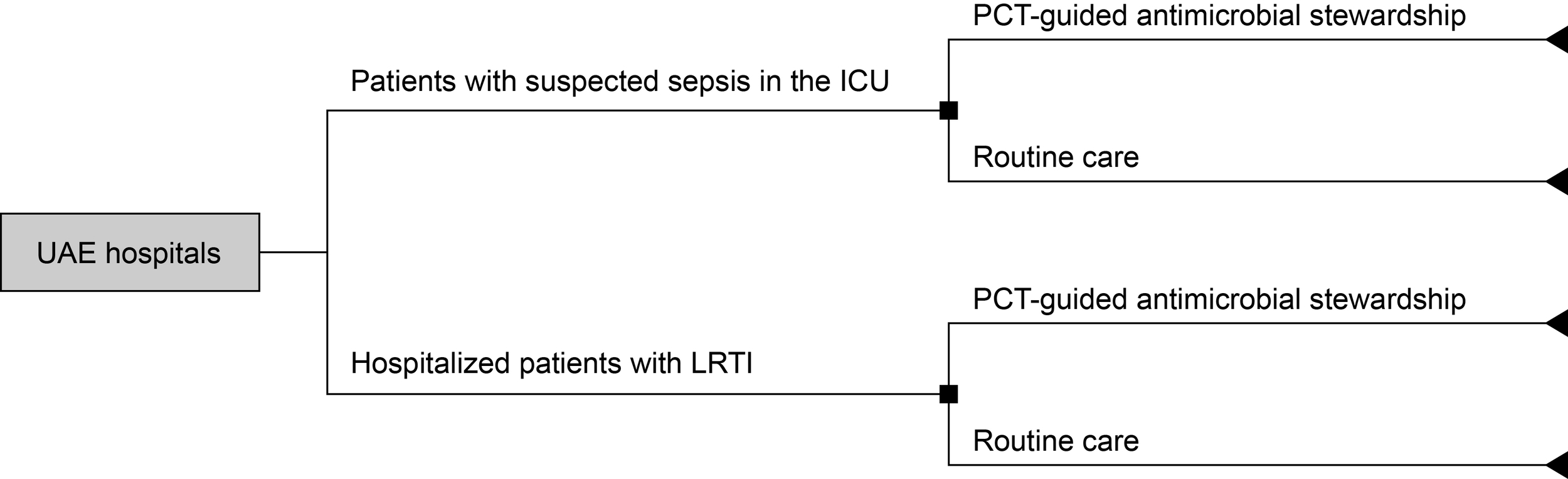
The budget impact model was based on the same previously published decision tree model28 used by Mewes et al.25 The model is a stylized decision tree designed to compare PCT-guided antimicrobial stewardship with routine care in two separate adult populations: patients with suspected sepsis in the ICU and hospitalized patients with LRTI. The model uses a societal and hospital perspective over a time horizon limited to the hospital stay. For each arm, it multiplies resource volumes by unit costs across all cost categories to produce an incremental cost per patient, which is then scaled by the annual national cases to a population-level budget impact. For the present study, the model was adapted to reflect the structure and parameters of the UAE healthcare system (Figure 1).
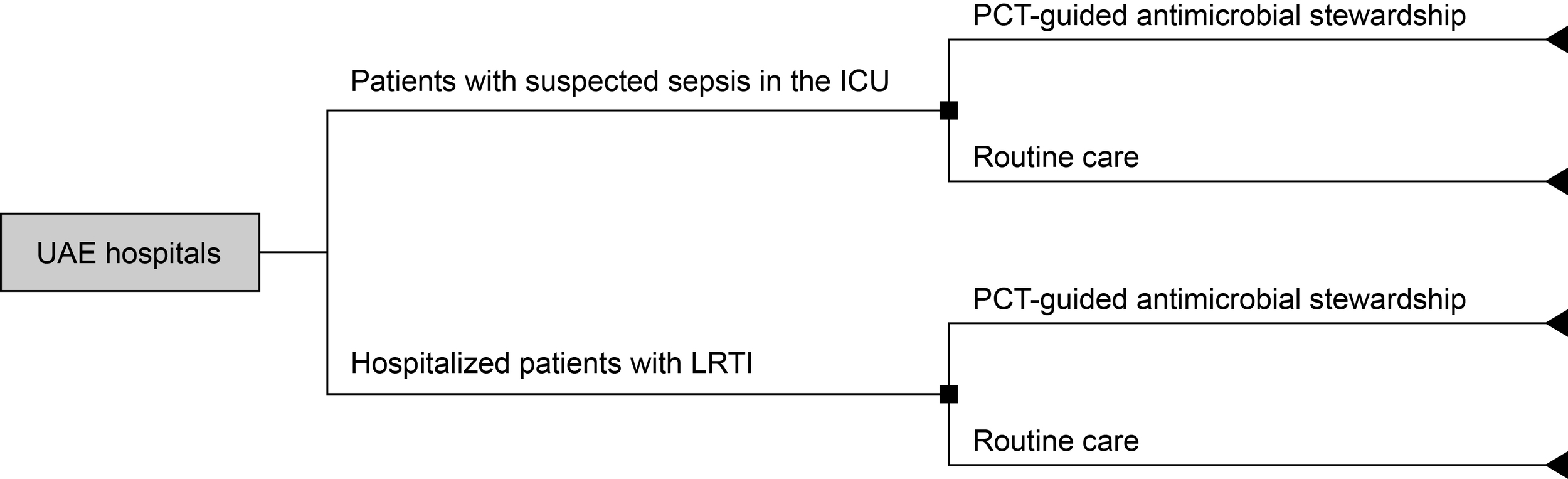
The study was not performed specifically from the perspective of the public or private payer as both use similar payment methodologies in the UAE and therefore these perspectives would not be expected to differ (for an overview of health insurance in the UAE, see Al Majali and Farghaky29). A local expert panel (see Model Parameters) advised on the relative proportions of clinical subtypes in the UAE for both suspected sepsis in the ICU (pulmonary sepsis, 60% [community-acquired pneumonia, 33.3%; hospital-acquired or ventilator-associated pneumonia, 66.7%]; urinary-origin sepsis, 25%; intra-abdominal and other types of sepsis, 15%) and hospitalized patients with LRTI (community-acquired pneumonia, 60%; hospital-acquired pneumonia, 40%).
For each pathway, antibiotic days avoided were estimated and associated costs assigned. Total costs were calculated by multiplying resource use (PCT tests, antibiotic treatment [for sepsis or LRTI], and hospital stays [general ward or ICU]) by unit prices, then summing for each strategy. Incremental cost per patient was derived by subtracting routine care costs from PCT-guided care costs. Population-level impact was estimated by applying annual case volumes for suspected sepsis in the ICU or hospitalized LRTI to per-patient costs. Event probabilities (eg, ICU admission rates) were used to estimate the number of patients experiencing C. diff infection.
Economic results were reported in accordance with the International Society for Pharmacoeconomics and Outcomes Research (ISPOR) good practice guidelines for budget impact analysis.30
Model Parameters
The model parameters were obtained via a focused, non-systematic, local, national, and international literature search, which was validated by a panel of 8 local experts with a range of relevant specialties (anesthesia, infectious diseases, intensive care, and pulmonary and critical care). Validation was conducted in two stages: (1) panel members completed a questionnaire to validate the applicability of the literature search findings to UAE routine care, based on their scientific judgment, then (2) a group expert panel meeting was held to discuss the consolidated results and reach consensus.
The agreed parameters (epidemiology, resource use, effectiveness of PCT-guided antimicrobial stewardship, and unit costs) are described below and summarized in Table 1. The parameters used to perform the analyses included base-case values to obtain results for the deterministic base case, minimum and maximum values (for sensitivity analyses), and their respective data sources.
Epidemiology
The annual number of adult cases of suspected sepsis in the ICU was estimated at 7842 (range: 6033-12 416). The base-case estimate and lower bound were based on a previously reported global pooled incidence of adult sepsis treated in the ICU (excluding low-incidence outlier data from Rwanda, a country with only two ICUs)31 adjusted for the projected UAE population size for 2026 based on World Bank data, while the upper bound was conservatively based on the previously reported incidence of all sepsis cases (all settings, all ages) in the UAE in 2017.32 Meanwhile, the annual number of hospitalized LRTI cases in adults was estimated at 18 422 (range: 16 761-20 083), based on a previously reported analysis of the global burden of lower respiratory tract infections (based on estimates for all ages, subtracting estimates for children younger than 5 years and adjusting for severity).37 For both sepsis and LRTI, hospital-acquired C. diff infections were estimated at 4.3% (2.0%-6.0%).33
The antimicrobial resistance (AMR) parameter represented the probability that a hospitalized patient’s infection would be resistant to the empirically prescribed antibiotic regimen; such infections incur the additional length of stay (LOS) and cost captured by the model. This probability was estimated separately for suspected sepsis in the ICU and for hospitalized LRTI by combining national surveillance data with the causative-pathogen distribution of each syndrome and the prescribing patterns reported during the expert panel meeting. More specifically, pathogen-specific resistance antibiotic resistance rates were obtained from the UAE National Antimicrobial Resistance Surveillance Report 2024 (Section 4.4, priority pathogens, all sources, national aggregate),13 which reports the percentage of resistant isolates for each pathogen-antibiotic combination (Supplementary Table S1). The causative pathogen distributions were restricted to the report’s priority pathogens; organisms not covered by Section 4.4 (Haemophilus influenzae and Proteus mirabilis) were excluded and the remaining pathogen proportions were renormalized to sum to 100% (Supplementary Table S2). Only data on the percentage of resistant isolates were used; isolates classified as intermediate were not counted as resistant, and pathogen-antibiotic combinations not reported were treated as susceptible. All three conventions made the resulting estimates conservative.
Syndrome-level resistance was derived as follows. First, the causative pathogen distribution of each clinical subtype of sepsis and LRTI was adapted from published etiology studies (Supplementary Table S2). As no UAE-specific syndrome etiology data were available, pathogen distribution was based on a study of patients hospitalized with community-acquired pneumonia in Saudi Arabia,39 a study of adult patients diagnosed with ventilator-associated pneumonia in an ICU in Qatar,40 and data on urinary-origin sepsis from the multinational Global Prevalence of Infections in Urology (GPIU) study.41 Each distribution was restricted to the pathogens for which resistance data were provided in the UAE National Antimicrobial Resistance Surveillance Report 2024, with renormalization to 100%. Second, the relative frequency of each subtype was assigned by the expert panel (Supplementary Table S3). Third, the empiric antibiotic regimens and their share of prescribing for each subtype were specified by the expert panel (Supplementary Table S4).
For each empiric regimen, resistance was represented by its principal gram-negative agent (the beta-lactam or carbapenem). Resistance to that agent was calculated as the average across the pathogens causing the subtype, weighted by how frequently each pathogen occurs. A companion agent included only for gram-positive cover (eg, vancomycin) was assumed to be effective and was not counted. These regimen values were then combined in two weighted steps: first averaged within each subtype according to prescribing frequency, then averaged across subtypes according to how common each subtype is, giving one single resistance rate for sepsis and one for LRTI (Supplementary Table S4). Intra-abdominal/other sepsis was excluded from this calculation because no reproducible regimen-level estimate was available, and the remaining sepsis subtype weights were renormalized accordingly. This yielded base-case antimicrobial resistance rates of 7.3% for sepsis and 6.8% for LRTI.
For the sensitivity analyses the parameter was varied between a lower and an upper bound. The lower bound reflected optimal broad-spectrum empiric coverage, estimated as the etiology-weighted resistance to carbapenems (4.1% for sepsis and 3.7% for LRTI). The upper bound was selected to correspond with the national population isolate-level resistance estimate based on input from the local expert panel and was considered a deliberately conservative extreme (22.2% for both sepsis and LRTI).
Resource Use
Duration of antibiotic treatment was estimated to be 8.4 days (range: 7.2-9.3) for suspected sepsis in the ICU34 and 9.4 days (range: 9.2-9.6) for hospitalized LRTI.38 For patients with suspected sepsis, the mean LOS on a general ward was estimated to be 4.0 days (range: 2.0-9.0) as a weighted average based on the severity of disease; the mean LOS in ICU was estimated to be 6 days (range: 4-16) (expert panel recommendation). LOS for hospitalized patients with LRTI on a general ward was estimated to be 13.7 days (range: 13.0-14.4).38 For patients admitted to ICU (estimated at 8.7% of cases [range: 6.6%-10.8%]),38 LOS in ICU was estimated to be 13.3 days (range: 12.8-13.8).38 For both suspected sepsis and hospitalized LRTI, the additional LOS on a general ward was estimated to be 7.4 days (range: 3.4-11.4) for those with antimicrobial resistance35 and 6.0 days (range: 4-10) for those with C. diff infection (expert panel recommendation). In the modeled PCT-guided antibiotic stewardship pathway, the frequency of PCT testing was informed by local expert consensus, with a base-case value of 5 tests per patient (range: 3-10) for suspected sepsis in the ICU and 3 tests per patient (range: 3-6) for hospitalized LRTI.
Effectiveness of PCT Antimicrobial Stewardship
For patients with suspected sepsis in the ICU, PCT-guided antimicrobial stewardship was expected to confer a difference in the duration of antibiotic treatment of 1.28 days (range: 0.61-1.95).34 For hospitalized patients with LRTI, PCT-guided antimicrobial stewardship was expected to confer a reduction in antibiotic prescription of 15.4% (range: 12.3%-18.4%) and a reduction in the duration of antibiotic treatment of 1.83 days (range: 1.50-2.15).38 For both suspected sepsis in the ICU and hospitalized LRTI, the expected reduction in hospital-acquired C. diff cases was 32.0% (range: 12.0%-47.0%)36 and the expected reduction in the rate of antimicrobial resistance per percent reduction of days on antibiotic treatment was 3.2% (range: 2.4%-4.0%).25
Unit Costs
In the absence of independent publicly available UAE procurement pricing, the unit cost of the PCT test was derived from Roche Diagnostics’ official pricing to the UAE distributor, inclusive of the standard distributor mark-up. Note that in-market pricing may vary based on specific contract terms; final costs are typically bundled within comprehensive agreements that include instrumentation, the full test menu, consumables, and additional materials tailored to each customer’s requirements. This variability was expected to be captured within the assumed range for the PCT cost explored in the sensitivity analyses.
A microcosting exercise was carried out to estimate the costs of antibiotic treatment, based on expert opinion on the most common antibiotic treatments for different sepsis and LRTI settings (see Supplementary Table S5). The experts categorized cases of suspected sepsis in the ICU as pulmonary sepsis (community- or hospital-acquired pneumonia) or urinary-origin sepsis, with hospitalized LRTI cases categorized as community- or hospital-acquired pneumonia. A structured data collection tool was used to capture expert panel consensus on antibiotic regimens (including monotherapies and combination therapies), duration of treatment, and patient utilization percentages per category. Weighted averages for antibiotic utilization were then calculated for each category, which were then aggregated to establish a representative utilization profile for suspected sepsis in the ICU and hospitalized LRTI. The mean costs of antibiotic treatment per day for suspected sepsis in the ICU and hospitalized LRTI were then calculated based on drug costs derived from the Department of Health Abu Dhabi 2019 price list, with average costs per generic molecule calculated across all commercially available formulations in the UAE.
The costs of hospital stays were based on standardized pricing for specific healthcare services across three representative providers in the UAE, as provided by a third-party agency. The model focused on two key variables: daily rates for general ward hospitalization and ICU stay. The final values used in the model represent the calculated average across the three hospitals.
Sensitivity and Scenario Analyses
Deterministic sensitivity analyses were performed to analyze the impact of parameter uncertainty and identify the drivers of results by means of univariate variations across the ranges of parameters. In univariate analyses, one parameter was altered to the extreme of its range of variability while all other parameters remained unchanged. Results were summarized in tornado plots. A probabilistic sensitivity analysis was performed to assess the joint impact of parameter uncertainty. This involved 1000 Monte Carlo simulations, where parameter variations were modeled according to specific probability distributions. Following standard technical recommendations,42 distribution parameters were estimated from means and standard deviations using the method of moments. The probabilistic sensitivity analysis was used to estimate 95% confidence intervals (CIs) for the main study outcomes.
In addition, several scenario analyses were conducted alongside the base case for both suspected sepsis in the ICU and hospitalized LRTI, using published data and input from the local expert panel to estimate the potential budget impact of different plausible variations in local clinical practice. Scenarios are summarized in Supplementary Table S6.
RESULTS
The results of the model-based analysis are shown in Table 2. The use of PCT-guided antimicrobial stewardship vs routine care for patients with suspected sepsis in the ICU and hospitalized patients with LRTI, respectively, was estimated to result in: 10 038 (95% CI: −17 732, −4747) and 50 331 (95% CI: −58 159, −43 289) fewer antibiotic treatment days; 38 (95% CI: −71, −17) and 263 (95% CI: −660, −90) antibiotic-resistant cases avoided; and 108 (95% CI: −218, −41) and 288 (95% CI: −484, −149) fewer C. diff cases, per year. This equated to an expected negative budget impact, reducing costs compared with routine care: total cost savings were estimated to be 494.4 AED (95% CI: −1027, −121) and 806.9 AED (95% CI: −1616, −404) per patient per year for suspected sepsis in the ICU and hospitalized LRTI, respectively. The expected budget impact on the UAE healthcare system per year would be a reduction of 3.9 (95% CI: −8.7, −0.9) million AED for suspected sepsis in the ICU and 14.9 (95% CI: −30.3, −7.3) million AED for hospitalized LRTI. Per 1000 patients, the expected budget impact per year would be a reduction of 0.5 (95% CI: −1.0, −0.1) million AED for suspected sepsis in the ICU and 0.8 (95% CI: −1.6, −0.4) million AED for hospitalized LRTI.
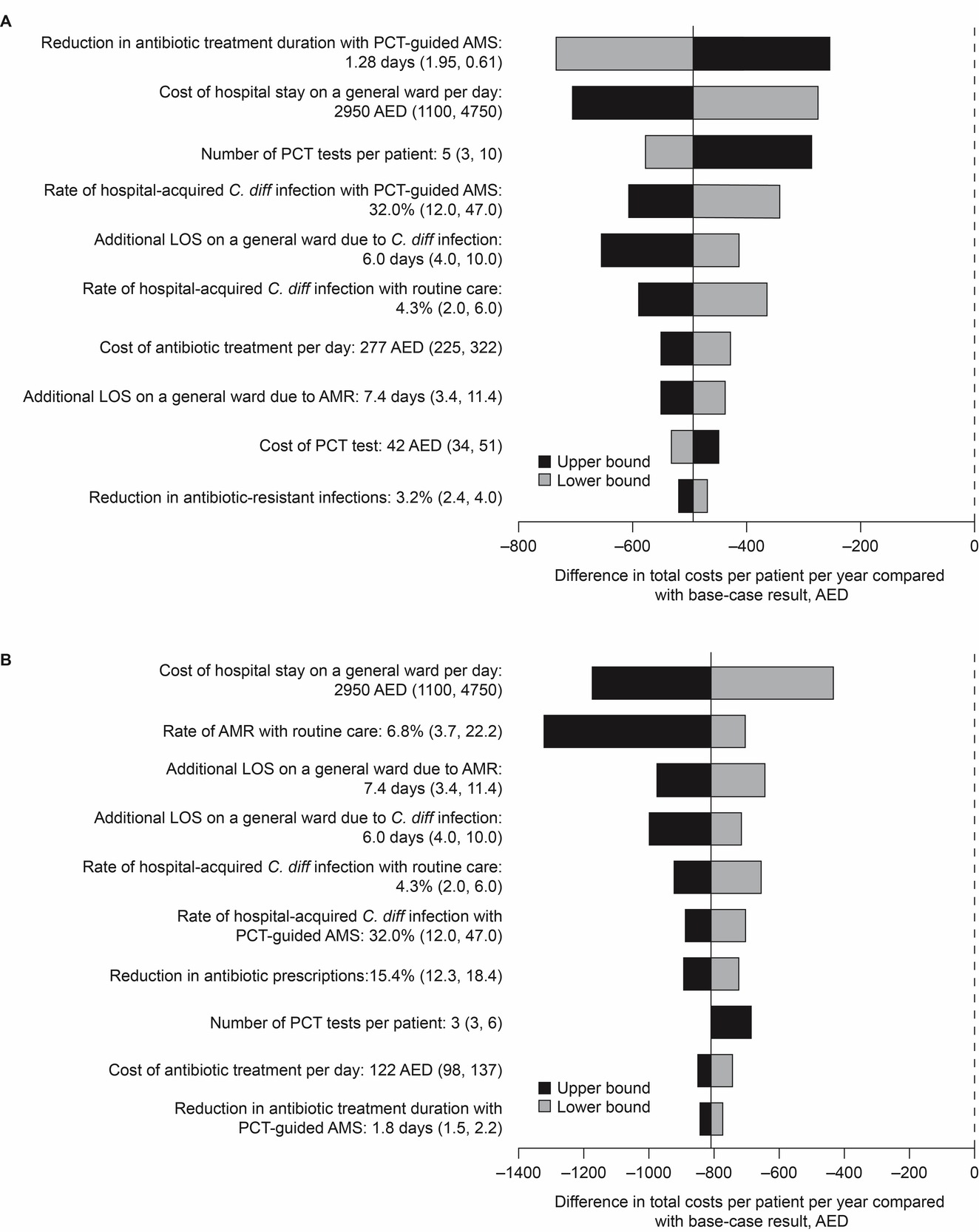
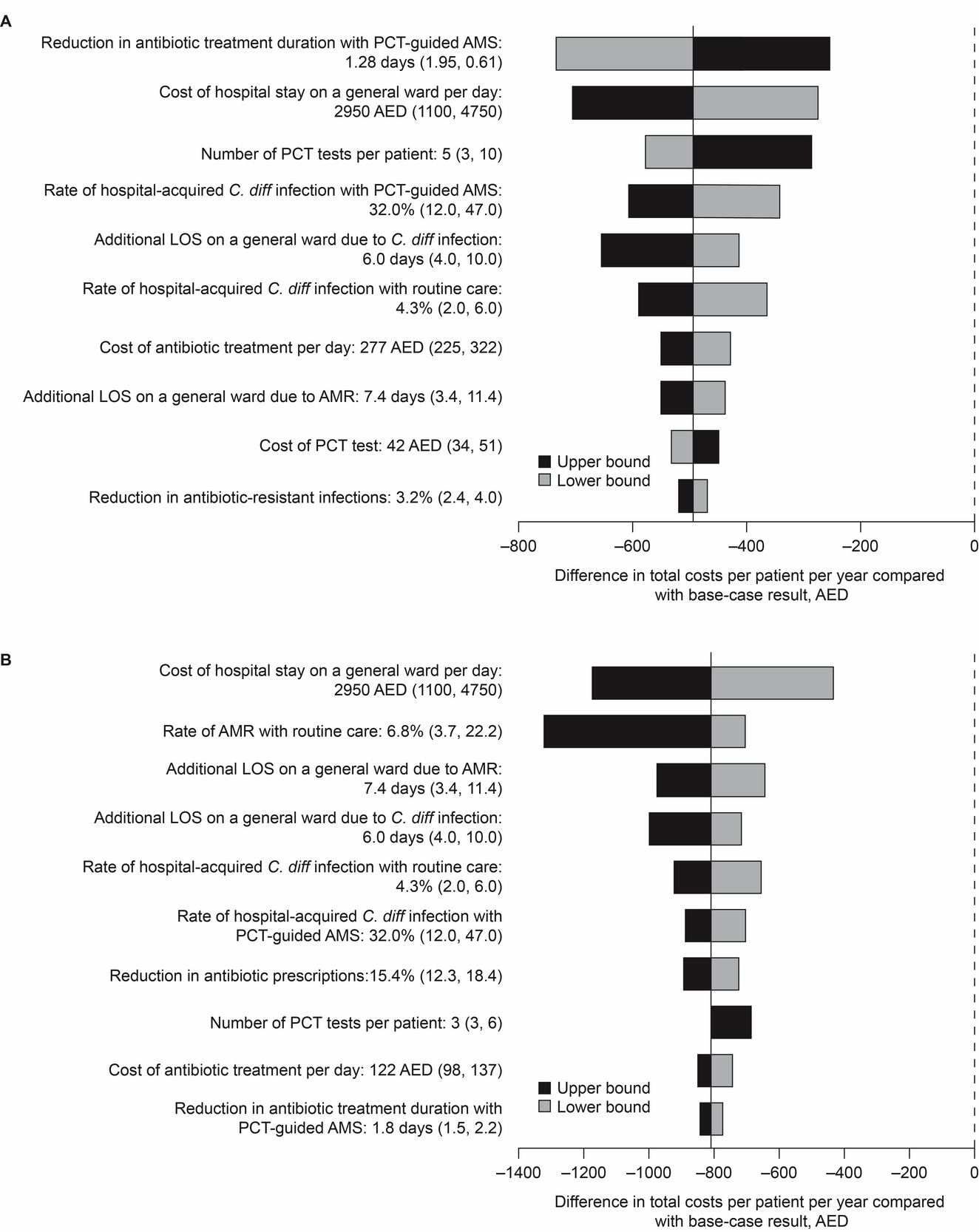
The probabilistic sensitivity analysis suggested that 100% of the simulations were cost saving under the model assumptions, for both suspected sepsis in the ICU and hospitalized LRTI (Table 2). In the deterministic sensitivity analysis, the main drivers impacting the analysis for suspected sepsis in the ICU were: the reduction in antibiotic treatment duration with PCT-guided antimicrobial stewardship, the cost of hospital stays in a general ward, the number of PCT tests per patient, the rate of hospital-acquired C. diff infection with PCT-guided antimicrobial stewardship, and additional LOS on a general ward due to C. diff infection (Figure 2A). The main drivers for hospitalized LRTI were the cost of hospital stays in a general ward, the rate of antimicrobial resistance with routine care, additional LOS on a general ward due to antimicrobial resistance, additional LOS on a general ward due to C. diff infection, and the rate of hospital-acquired C. diff infection with routine care (Figure 2B).
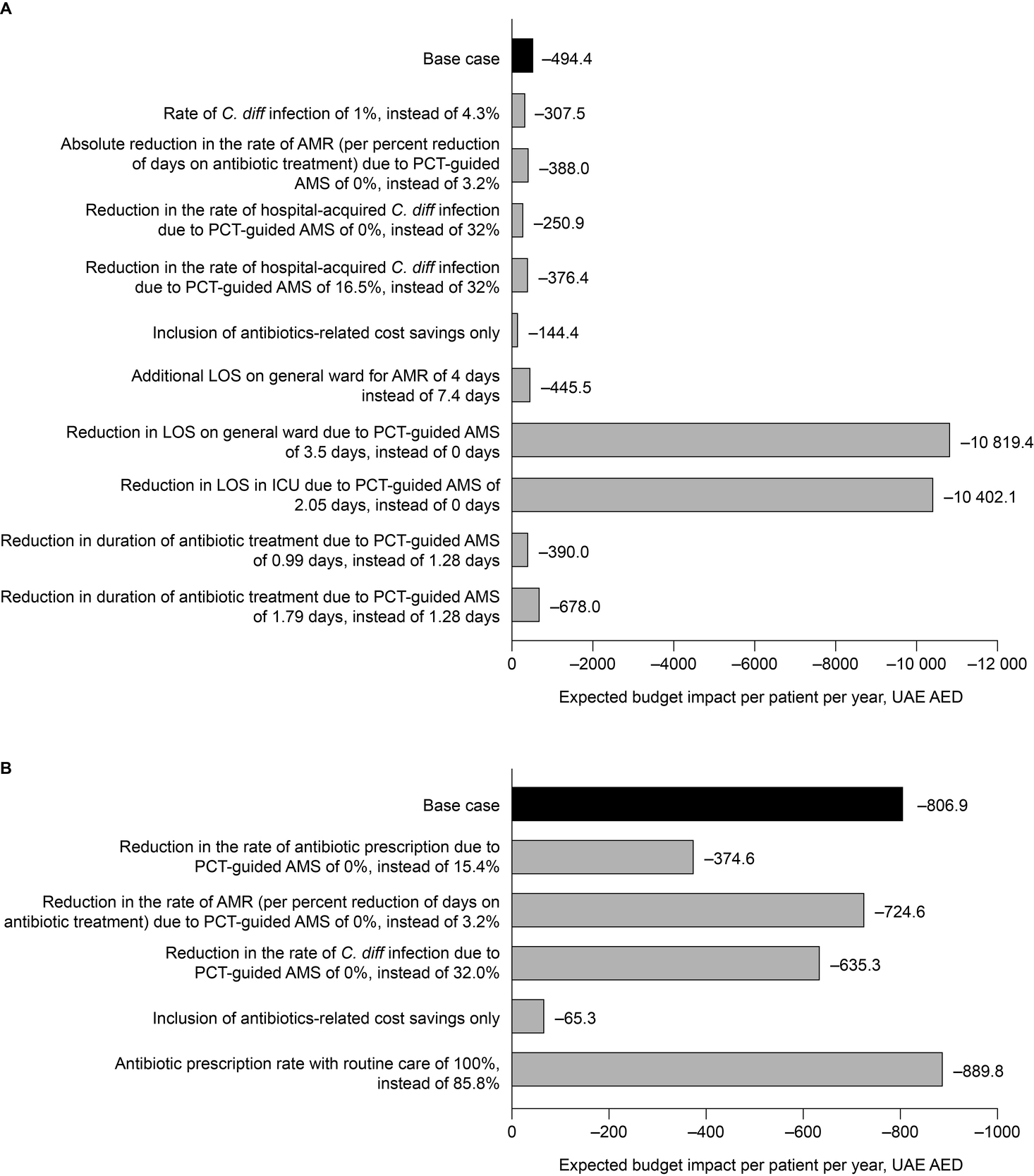
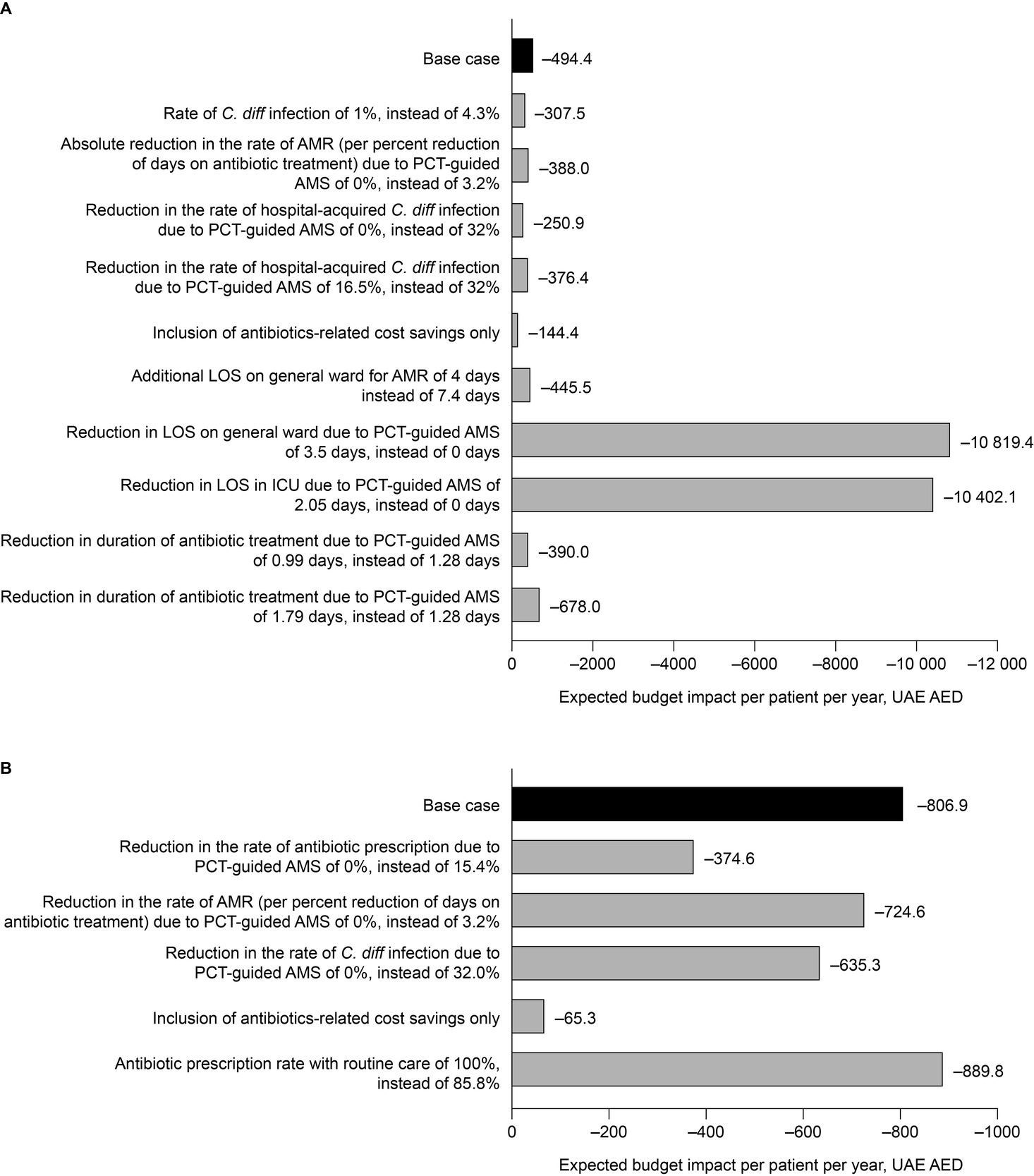
Scenario analyses showed that the greatest cost savings in suspected sepsis in the ICU occur when hospital LOS is reduced in the context of PCT-guided antimicrobial stewardship, demonstrating that LOS assumptions have the most impact on budget outcomes (Figure 3A). Smaller savings were linked to reductions in antibiotic treatment duration as a result of PCT-guided antimicrobial stewardship. In hospitalized LRTI, the base case was associated with moderate savings, which were increased by assuming an antibiotic prescription rate of 100% with routine care, and reduced by including only the cost savings resulting from a reduction in antibiotic use or by assuming no reduction in the rate of antibiotic prescriptions, antimicrobial resistance, or C. diff infection due to PCT-guided antimicrobial stewardship (Figure 3B).
DISCUSSION
This study evaluated the budget impact of implementing PCT-guided antimicrobial stewardship compared with routine care for patients with suspected sepsis in the ICU or hospitalized patients with LRTI in the UAE. To our knowledge, this is the first analysis of its kind in this setting. The model was adapted from a previously published decision tree framework25,28 and tailored to reflect UAE healthcare system parameters.
Our findings suggest that PCT-guided antimicrobial stewardship could deliver economic benefits in the UAE. Healthcare impacts were estimated and included fewer antibiotic treatment days, fewer antibiotic-resistant cases, and fewer C. diff cases. This is consistent with evidence from randomized trials and meta-analyses showing that PCT-guided protocols shorten antibiotic duration without compromising patient safety.43–45 These impacts equated to cost savings and a lower expected annual budget impact compared with routine care. Importantly, even conservative scenarios, such as those considering savings only from reduced antibiotic use, still showed cost reductions, underscoring the economic benefits of the intervention across a range of scenarios.
The findings are supported by studies in other countries. Health economic evaluations in the US,25 Argentina,26 and Belgium27 have all reported cost savings associated with PCT-guided antimicrobial stewardship, although differences in magnitude could reflect local epidemiology, resource constraints, and healthcare structures.
A key limitation of this study is the reliance on data from a nonsystematic literature search and the use of global data and input from local experts for some model parameters. While this may impact the robustness of the results to some extent, including the robustness of the apparent 100% probability of cost-saving with PCT-guided antimicrobial stewardship under the model assumptions, it was considered a pragmatic approach in the absence of published UAE-specific data, with the local expert panel representing a range of relevant specialties. To put the potential impact into context, it is also important to recognize that some model parameters would have had a greater impact on the results than others. For example, some parameters relating to average or additional LOS on a general ward or in the ICU were solely reliant on the expert panel, but this was not considered to have any bearing on the results, as the same values were assumed for both PCT-guided antimicrobial stewardship and routine care (the potential benefits of PCT in reducing LOS compared with routine care was explored only in the scenario analyses). Meanwhile, antimicrobial resistance rate was based on a published UAE-specific source, and will have been a driver of budget impact, albeit only in the hospitalized LRTI population, in which PCT-guided antimicrobial stewardship could avoid the use of antibiotics in some patients vs routine care. Therefore, in the hospitalized LRTI population, a lower antimicrobial resistance rate would reduce the estimated cost savings associated with the use of PCT (in the suspected sepsis in the ICU population, PCT-guided antimicrobial stewardship would serve only to reduce the duration of antibiotic treatment vs routine care, hence any variation in antimicrobial resistance rate would have an equal effect on both PCT-guided antimicrobial stewardship and routine care and the budget impact of PCT would remain unchanged irrespective of antimicrobial resistance rates). Ideally, all model parameters would have been based on robust, UAE-specific data. Future research should include systematic evaluations and randomized controlled trials to confirm the findings.
When considering real-world applications, it is also important to recognize that there may be limitations of PCT-guided antimicrobial stewardship itself. Notably, elevated levels of PCT may not always be the result of bacterial infection, potentially occurring in other situations, including prolonged or severe cardiogenic shock, prolonged severe organ perfusion anomalies, small cell lung cancer or medullary C-cell carcinoma of the thyroid, during treatment that stimulates the release of pro-inflammatory cytokines, and early after major trauma, major surgical intervention or severe burns.46,47 Equally, a low or normal PCT level may not always signal the absence of bacterial infection, particularly early in the course of infection or in the case of localized infections or subacute infective endocarditis.47 Therefore, for diagnostic purposes, results should always be considered in the context of the patient’s medical history, clinical examination, and other findings.46
Overall, this study suggests that a modest per-patient investment in PCT-guided antimicrobial stewardship could yield significant cost savings in the UAE, while potentially contributing to national priorities around optimizing the use of antimicrobials.17 These results provide supportive evidence for considering PCT-guided protocols as part of routine antimicrobial stewardship strategies in the UAE.
CONCLUSIONS
This study models the economic benefits that could be obtained by implementing PCT-guided antimicrobial stewardship in the UAE. Particularly given that antimicrobial resistance is widespread and increasing in the UAE, and the national priorities to optimize the use of antimicrobials through robust antimicrobial stewardship programs, the study findings should be informative for healthcare policymakers in the UAE.
Disclosures
G.M. and R.A. are employees of Roche Diagnostics Middle East, and O.U.G. is an employee of Roche Diagnostics International; O.U.G. also holds Roche stocks. A.M.E., N.H., and W.N. received a consulting fee for participation in the expert panel referred to in this manuscript, and A.M.E. has also received honoraria for speaking and advisory board participation from BioMérieux, Hikma, MSD, Mundipharma, Pfizer and Roche.
Funding
The study was funded by Roche Diagnostics International. Medical writing support was provided by Hannah FitzGibbon from The Salve Health Ltd., UK, under the direction of the authors, in accordance with Good Publication Practice 2022, and with funding from Roche Diagnostics International and B·R·A·H·M·S GmbH, part of Thermo Fisher Scientific. The authors would like to thank Dr Nehad Nabeel Al Shirawi of Al Fujiarah Hospital, Fujiarah, UAE, for her participation in the expert panel, and also Stefan Leichtl of B·R·A·H·M·S GmbH, part of Thermo Fisher Scientific, Hennigsdorf, Germany, for his review and input into the draft manuscript.
AI Disclosure
Claude (Anthropic; model Opus 4.8, accessed October 2026) was used to assist with identifying and retrieving published source studies for the pathogen distributions, extracting and cross-checking the resistance and etiology data against the primary sources, and performing the weighting calculations used to derive the syndrome-specific antimicrobial resistance rates (Supplementary Tables S1-S4). All source data were verified against the original publications, and all calculations were independently checked by the authors, who take full responsibility for the content of the manuscript, including any portions produced with the aid of the AI tool.
Data Sharing Statement
All relevant data are provided within the manuscript and supplementary files.