
BACKGROUND
Colorectal cancer (CRC) is a preventable and highly treatable form of cancer, with a 5-year survival rate of 91% when diagnosed at the local stage.1 Despite this, it remains a major public health burden in the US and a leading cause of cancer-related mortality.2 Screening for CRC reduces disease-specific mortality through the early detection and removal of precancerous lesions.3,4 These benefits underpin current recommendations from the American Cancer Society and US Preventive Services Task Force (USPSTF) for routine screening of average-risk adults aged 45-75 years.4,5
Multiple effective CRC screening modalities are available, including colonoscopy, sigmoidoscopy, and stool-based tests (SBTs) such as fecal immunochemical tests (FIT), fetal occult blood test (FOBT), and multitarget stool DNA (mt-sDNA) tests.4 Among these, stool-based tests offer the advantage of home-based sample collection and kit return for laboratory processing, which may reduce barriers associated with in-clinic procedures.6–8 However, the effectiveness of stool-based screening depends on two critical steps: initial test completion and appropriate follow-up of abnormal results with colonoscopy.9 For patients with a positive SBT result, follow-up colonoscopy (FU-CY) is essential to complete the screening process.9 The importance of this step is increasingly reflected in quality measurement: the National Committee for Quality Assurance (NCQA) has proposed a new Healthcare Effectiveness Data and Information Set (HEDIS) measure, Follow-Up After Positive Colorectal Cancer Non-Invasive Screening Test, to assess the percentage of persons aged 45-85 years who receive colonoscopy after a positive noninvasive CRC screening test.10
The National Colorectal Cancer Roundtable has set a CRC screening goal of 80% or higher in every US community.11 California is a large and diverse state with established CRC screening programs, but disparities in screening uptake and follow-up persist across racial, ethnic, socioeconomic, and geographic groups.12,13 A retrospective 1-year study in 38 healthcare organizations (n = 20 581) found a 47.9% rate of FU-CY completion within 180 days of a positive SBT, with all modalities evaluated together.9 However, modality-specific analyses suggest higher FU-CY completion after positive mt-sDNA results than after positive FIT/FOBT results.14 In a large national claims-based analysis, overall FU-CY adherence was 77.1% following a positive mt-sDNA result, compared with 45.1% following a positive FIT/FOBT result, with 180 day FU-CY rates ranging from 62.7% to 74.9% for mt-sDNA and from 36.1% to 42.5% for FIT/FOBT across payer types.14 One-year rates of FU-CY completion ranging from 68% to 78% have been observed with mt-sDNA testing in retrospective cohort studies.15–18 Identifying patient- and system-level factors associated with mt-sDNA test completion and FU-CY may help inform the design of more effective and equitable CRC screening programs. This retrospective study evaluated factors associated with adherence to mt-sDNA testing and, among patients with positive mt-sDNA results, completion of FU-CY within a large health system in California.
METHODS
Data Sources
Data from the Abbott Laboratory Database were linked with administrative claims data from Komodo Health. The Abbott Laboratory Database provided detailed test-level information for mt-sDNA orders, including order and result dates, ordering provider and facility characteristics, and patient demographics. The linked laboratory and claims data used for this analysis were available beginning in January 2016. Because eligibility required at least 6 months of continuous health plan enrollment before mt-sDNA shipment, eligible index shipments were identified from July 2016 through June 2023. The June 2023 shipment cutoff was selected to provide adequate observation time for ascertainment of the prespecified 365-day mt-sDNA adherence and follow-up colonoscopy outcomes.
Data from Abbott were linked with administrative claims from Komodo Health using a privacy-preserving tokenization approach. This method enabled patient-level integration of screening data with downstream healthcare events while maintaining compliance with the Health Insurance Portability and Accountability Act (HIPAA).
All data were de-identified in accordance with HIPAA requirements. The study was conducted in line with the principles of the Declaration of Helsinki and qualified for exemption from institutional review board approval under 45 CFR § 46.104(d)(4).
Study Design and Population
The study evaluated adherence to mt-sDNA testing and completion of FU-CY after positive results among patients receiving care within the Providence Health System facilities located in California. The study population was not restricted to members of Providence Health Plan; it included eligible patients with mt-sDNA test orders associated with California-based Providence Health System facilities, regardless of insurance type. Providence Health System is a large integrated healthcare system with facilities across multiple western US states. Because patient populations, insurance programs, healthcare delivery, and payer environment may vary by state, patients receiving care at Providence facilities outside California were not included in the present analysis to avoid introducing data heterogeneity. Test kits were eligible for inclusion in the mt-sDNA adherence cohort if they were shipped to patients aged ≥45 years at the time of ordering and if the patient had at least 6 months of continuous health plan enrollment before the shipment date, which served as the index date for the adherence analysis. Continuous enrollment was defined as uninterrupted health plan coverage throughout the required observation period. During the 6-month pre-index period, test kits were excluded if claims data indicated prior CRC, advanced neoplasia, inflammatory bowel disease, hereditary cancer syndromes, or other predefined high-risk conditions. These conditions were identified using prespecified claims-based diagnosis and procedure code sets. Detailed code sets are provided in Supplementary Table S1. Non–point-of-care orders were excluded because they could represent replacement, administrative, or other nonstandard ordering workflows. Separately, duplicate analytic records were defined as multiple records for the same patient with the same shipment date and were consolidated into a single observation. Qualifying mt-sDNA shipments for the same patient on different dates were considered distinct screening encounters and were retained as separate kit-level observations.
The FU-CY cohort was restricted to patients with a positive mt-sDNA result who had 365 days of continuous health plan enrollment after the positive result date, which served as the index date for the FU-CY analysis. The 365-day post-index enrollment requirement ensured a complete observation window for ascertainment of FU-CY within 1 year. The current study was single-arm, and no within-group comparisons were prespecified or intended.
Variables and Outcomes
Baseline demographic characteristics among mt-sDNA recipients in this analysis included age group, sex, race and ethnicity, insurance type, and urban-rural residence. Socioeconomic context was captured using zip code–level median annual household income. Additional variables included test ordering history, ordering provider specialty, prior exposure to mt-sDNA testing, and the modality of patient outreach (full digital reminders, email only, short messaging service [SMS] text only, or no digital reminders). All patients were eligible for a standardized patient navigation program after mt-sDNA kit shipment. Standard navigation included mailed communications and telephone outreach when telephone contact information was available, including welcome communications, reminders to complete and return the kit, and notification of test-result availability. Reminder outreach was generally delivered approximately 2 to 3 times per week during the first 3 weeks after shipment, with additional reminders scheduled if the kit had not been returned. Digital reminders were layered onto this standard navigation program when valid mobile telephone numbers and/or email addresses were available and patients had not opted out of those communication channels. Full digital outreach was defined as both SMS and email reminders in addition to standard navigation; email-only and SMS-only categories reflected receipt of the respective digital channel in addition to standard navigation; and no digital outreach reflected standard navigation without SMS or email reminders. SMS reminders were unidirectional. Because digital channels were additive, outreach groups could differ in the total number of reminder contacts as well as communication modality; however, the exact number and timing of individual patient contacts were not available for analysis. Ordering provider specialty categories were defined using provider specialty coding available in the claims data structure; nurse practitioners and physician assistants were retained as a separate category from primary care physicians to maintain consistency with prior analyses using this data structure. Separate colonoscopy-specific outreach data were not available; therefore, outreach modality in the FU-CY analyses reflects prior participation in digital outreach for mt-sDNA adherence rather than a direct measure of outreach intended to facilitate FU-CY completion.
Adherence to mt-sDNA testing was defined as return of a completed test by the patient and a valid result (positive or negative) within 1 year of shipment. Time to mt-sDNA adherence was calculated as the interval between shipment and receipt of a valid test result. Completion of FU-CY was defined as the first eligible colonoscopy claim occurring within 1 year of a positive mt-sDNA result, regardless of whether the procedure occurred within or outside Providence facilities, provided that the claim was observable in the linked claims data. Colonoscopy was evaluated as diagnostic follow-up after a positive mt-sDNA result and was not analyzed as an alternative screening pathway among patients who did not return an mt-sDNA kit. Time to follow-up was defined as the interval between the mt-sDNA result date and the first eligible colonoscopy claim. The 365-day window for both mt-sDNA adherence and FU-CY completion after positive test reflected the availability of linked laboratory and claims data and was chosen for consistency with prior real-world studies that evaluated mt-sDNA adherence.14–17
Statistical Analyses
Descriptive analyses were conducted to summarize patient characteristics and mt-sDNA test completion rates. Differences in mt-sDNA adherence and FU-CY completion across subgroups were assessed using chi-square tests.
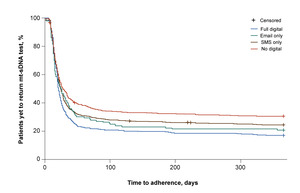
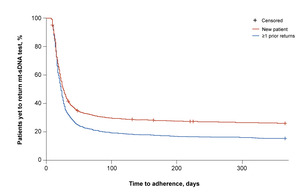
Time to mt-sDNA adherence was compared by Kaplan-Meier curves for differences in digital outreach mode and differences in prior or first-time testing. Index date was defined as shipment request date, and time to event was defined as time to receipt of a completed kit to Abbott labs. Patients who did not return kits were censored after 365 days, death, or study end date, whichever occurred first. For comparisons across digital outreach groups, a global log-rank P value was calculated across all outreach modalities. Differences between first-time and prior testing across groups were also assessed using log-rank tests.
Multivariable logistic regression using generalized estimating equations (GEE) was used to identify factors associated with mt-sDNA adherence, with results reported as adjusted odds ratios (ORs) and 95% confidence intervals (95% CIs). Among test kits with a positive mt-sDNA finding, factors associated with time to FU-CY were evaluated using Cox proportional hazards regression with results reported as adjusted hazard ratios (HRs) with 95% CIs. Both models accounted for within-patient correlation arising from multiple test kits per patient, using patient-level clustering in the GEE model and cluster-robust variance estimation in the Cox model. The proportional hazards assumption was assessed, and we found that several variables (health insurance type: commercial insurance; provider specialty: obstetrician/gynecologist (OB/GYN), primary care physician [PCP]; outreach type: full digital, unknown) violated the assumption. Therefore, the Cox proportional hazards analysis was rerun with time varying terms. Adjusted hazards ratios were measured at 30, 90, 180, and 365 days post-index.
All statistical analyses were performed using SAS software (version 9.4; SAS Institute). P values were derived from chi-square tests comparing proportions across subgroups. A 2-sided P value <.05 was considered statistically significant.
RESULTS
Study Population
Between July 2016 and June 2023, 8860 mt-sDNA test kits were ordered by Providence Healthcare System in California. After applying exclusion criteria, 6191 mt-sDNA test kit orders were analyzed (Supplementary Figure S1). The cohort was predominantly female (62.6%) and largely comprised patients aged 50-64 years (47.7%), with 53.4% identifying as White (Table 1). The majority of test kits were distributed to individuals with commercial insurance (58.0%), with the remainder covered by traditional Medicare, Medicare Advantage, or Medi-Cal (the version of Medicaid administered by California). Recipients were overwhelmingly metropolitan residents (94.0%), and more than two-thirds lived in zip codes with median annual household incomes exceeding $100 000. PCPs (64.6%) accounted for the majority of test orders. Following test shipment, SMS text messaging was the most common form of digital outreach (41.4%), whereas comprehensive digital outreach (SMS and email) was less common (8.8%). Most tests were ordered for patients new to mt-sDNA screening (Table 1).
Testing Adherence and Time to Adherence
Within the analytic cohort of 6191 mt-sDNA test kits, 4766 were completed and returned within 365 days, corresponding to an overall adherence rate of 77.0% (Supplementary Figure S1; Table 1). Adherence varied significantly across multiple patient- and system-level factors, including age, sex, insurance type, zip code–level median household income, provider specialty, outreach modality, and prior test return history (Table 1).
Adherence rates varied by insurance type; higher rates were observed among patients covered by traditional Medicare (85.7%) than among patients in other insurance subgroups, with adherence falling to 33.3% among Medi-Cal beneficiaries. Adherence increased with zip code–level median household income. Patients who had their test ordered by a gastroenterologist had the highest adherence of any subgroup (88.5%). Test kit shipments supported by full digital outreach had an 83.5% adherence rate compared with 69.2% for those kits with no digital outreach. Patients with prior mt-sDNA test completion had higher completion rates than new users (Table 1).
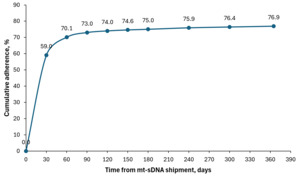
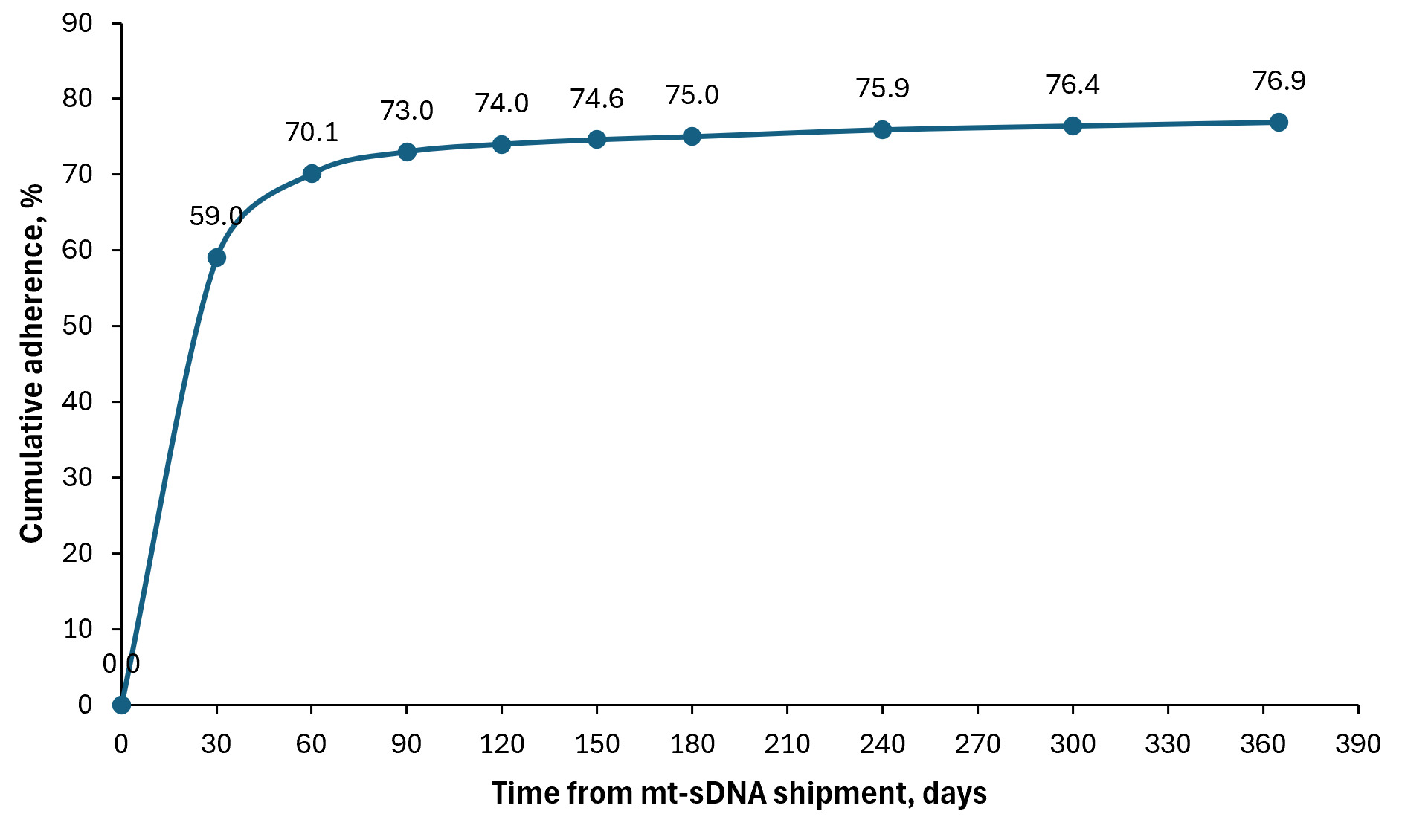
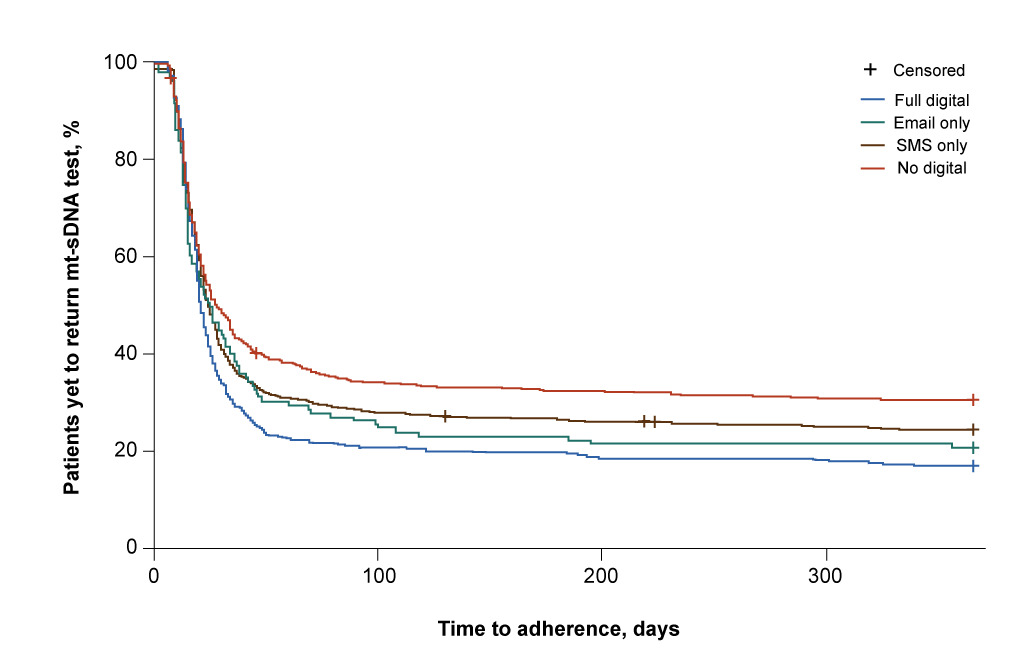
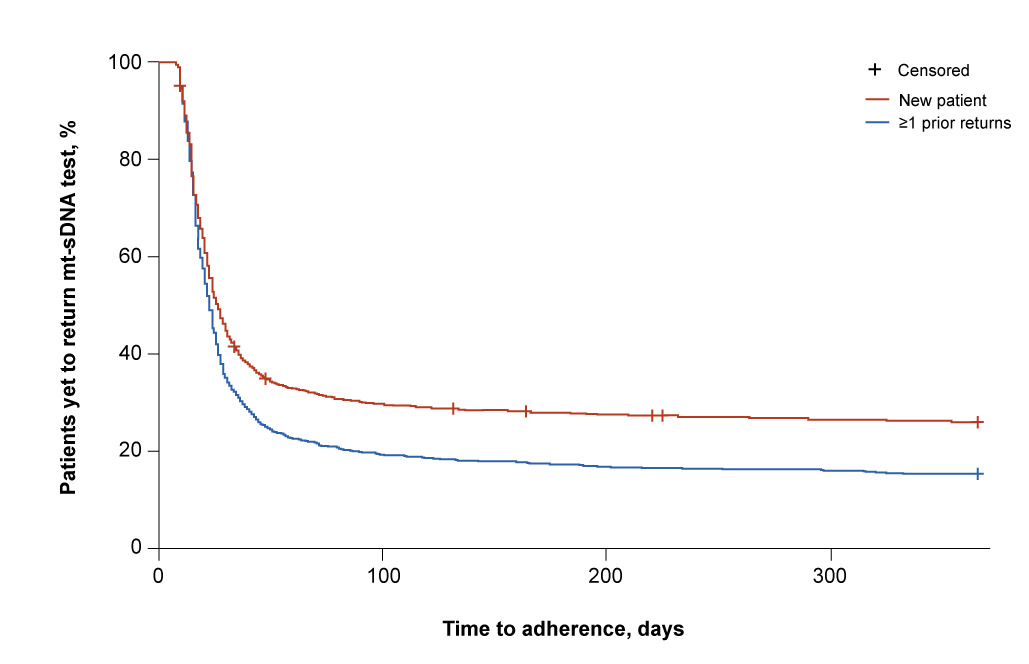
Cumulative adherence increased rapidly within the first 3 months—from 59.0% at 30 days to 73.0% at 90 days—and then rose more gradually to 76.9% at 365 days (Figure 1). Kaplan-Meier analysis demonstrated significant differences in time to test adherence across the four outreach strategies: full digital, email only, SMS text only, and no digital outreach (Figure 2). The shortest time to test return was observed in the full digital subgroup, followed by the email-only subgroup. In a separate analysis stratified by prior mt-sDNA participation, time-to-adherence curves differed significantly between patients with ≥1 prior mt-sDNA test return and first-time recipients (log-rank χ2 = 49.7, df = 1, P < .0001) (Figure 3).
Multivariable Analysis of Predictors of mt-sDNA Adherence
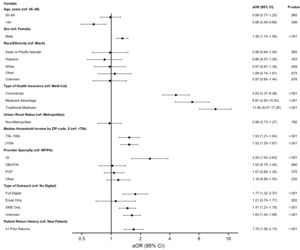
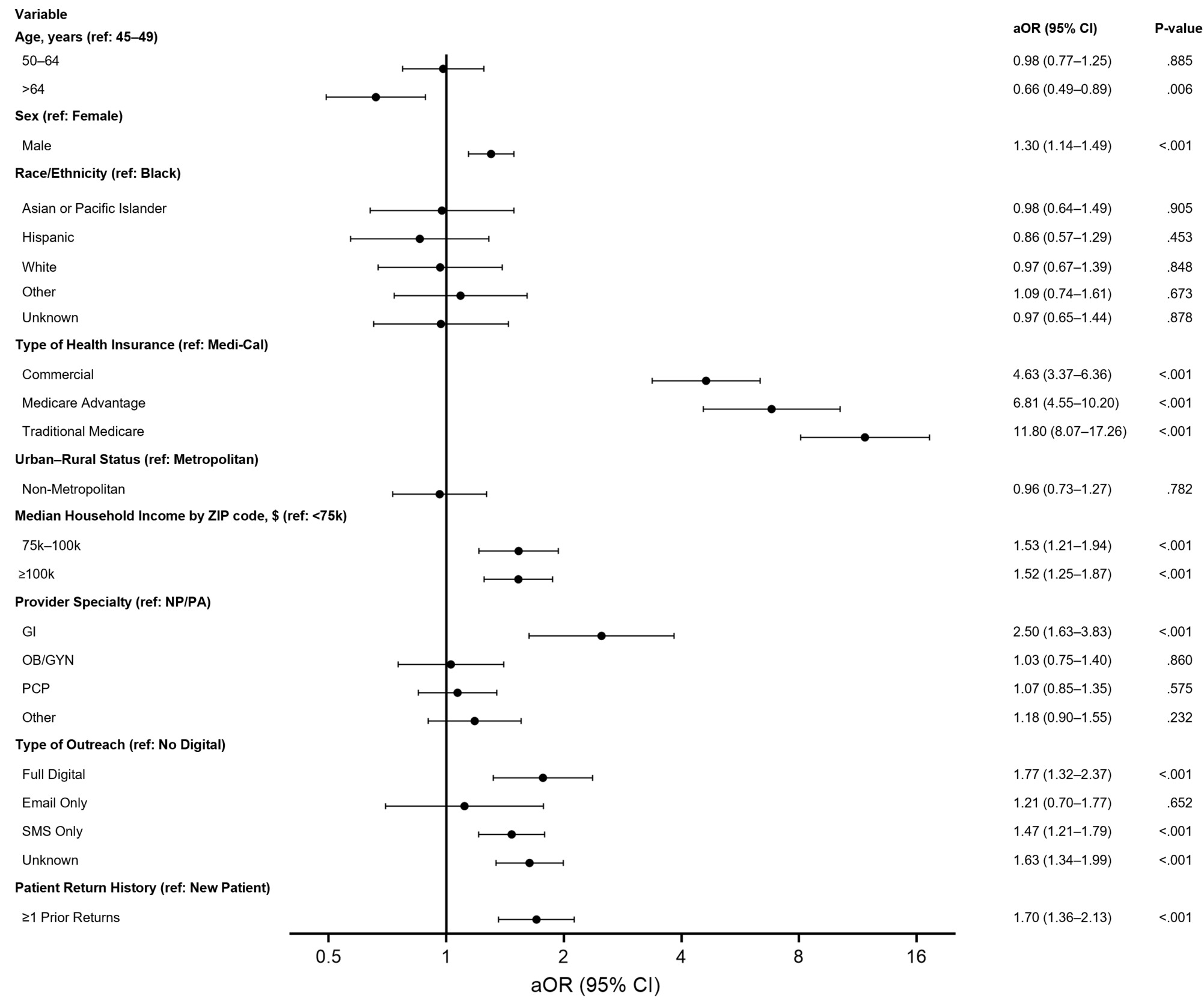
Multivariable logistic regression analysis using GEE demonstrated that several demographic, socioeconomic, and healthcare-delivery factors were independently associated with adherence to mt-sDNA testing (Figure 4). Males were associated with higher adjusted odds (aOR) of adherence than females (aOR, 1.30; 95% CI, 1.14 - 1.49; P < .001). Compared with the Medi-Cal subgroup, higher adjusted odds of adherence were observed among patients with commercial insurance (aOR, 4.63; 95% CI, 3.37-6.36; P < .001), those covered by Medicare Advantage (aOR, 6.81; 95% CI, 4.55-10.20; P < .001), and beneficiaries of traditional Medicare (aOR, 11.80; 95% CI, 8.07-17.26; P < .001). Gastroenterologist-ordered tests were also associated with higher adjusted odds of adherence compared with tests ordered by nurse practitioners or physician assistants (aOR, 2.50; 95% CI, 1.63-3.83; P < .001). Prior mt-sDNA return was also associated with increased adjusted odds of adherence compared with no previous return (aOR, 1.70; 95% CI, 1.36-2.13; P < .001). Relative to no digital outreach, full digital outreach (aOR, 1.72; 95% CI, 1.28-2.32; P < .001) and SMS-only outreach (aOR, 1.77; 95% CI, 1.32-2.37; P < .001) were associated with greater odds of adherence. Higher zip code–median household income was associated with increased odds of adherence ($75 000-100 000: aOR, 1.53; 95% CI, 1.21-1.94; P < .001; ≥$100 000: aOR, 1.53; 95% CI, 1.25-1.87; P < .001; reference: <$75 000). Race and ethnicity were not independently associated with mt-sDNA adherence in adjusted analyses (White: aOR, 0.97; 95% CI, 0.67-1.39; P = .848; Asian or Pacific Islander: aOR, 0.98; 95% CI, 0.64-1.49; P = .905; Hispanic: aOR, 0.86; 95% CI, 0.57-1.29, P = .453; reference: Black) (Figure 4).
Follow-up Colonoscopy
Among mt-sDNA kits completed within 1 year, 595 yielded positive results for biomarkers associated with colorectal neoplasia. Of these, 560 positive tests met the continuous enrollment requirement for inclusion in the FU-CY analysis. Completion of FU-CY within 1 year was achieved by 394 (70.4%) of these 560 patients (Supplementary Figure S1; Table 1). No significant differences in FU-CY completion rates were observed according to age, sex, race and ethnicity, metropolitan-rural residence, insurance type, median household income by zip code, provider specialty, outreach modality, or prior mt-sDNA return history (Table 1).
Multivariable Cox Regression Analysis of Factors Associated with Time to Follow-up Colonoscopy
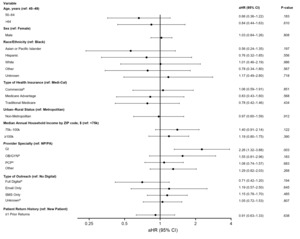
Tests ordered by gastroenterologists were associated with a shorter time to FU-CY completion (aHR, 2.26; 95% CI, 1.32-3.88; P = .003; reference: nurse practitioner/physician assistant) (Figure 5). No association was observed for age, sex, race and ethnicity, insurance type, metropolitan-rural residence, median household income by zip code, outreach modality, prior mt-sDNA return history or other patient characteristics. Several variables were found to violate the proportional hazards assumption of the Cox analysis; these are noted in Figure 5.
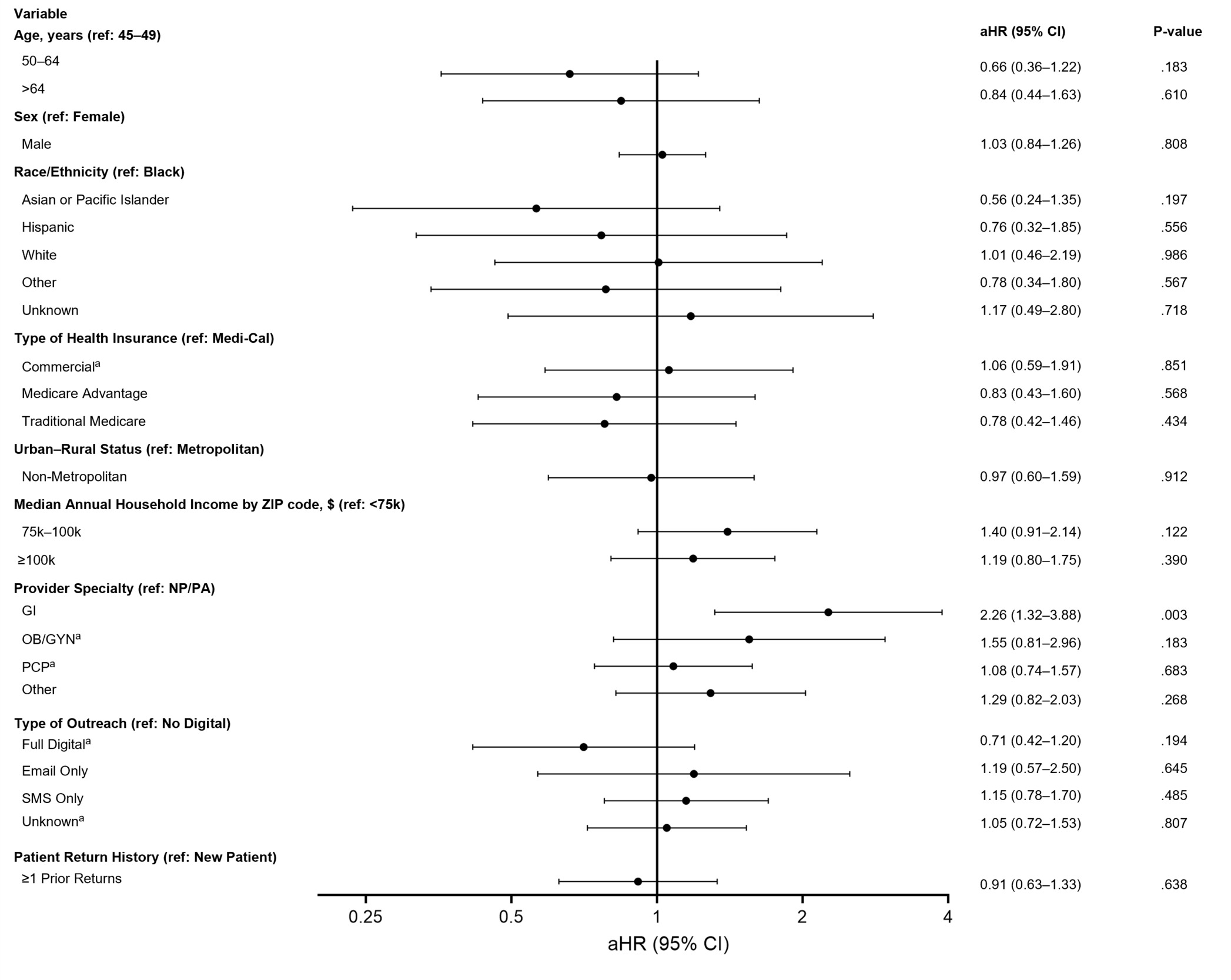
After rerunning the Cox analysis using time varying terms, we found that the Commercial, OB/GYN, PCP, and Unknown outreach subgroups had significant time varying effects with FU-CY (Supplementary Table S2).
DISCUSSION
In this retrospective real-world study of mt-sDNA screening within the Providence Healthcare System in California, overall adherence to mt-sDNA testing was high, with 77.0% of eligible test kits completed within 1 year of shipment. Among patients with positive mt-sDNA results who met the continuous enrollment requirement, 70.4% completed FU-CY within 365 days. These findings demonstrate strong participation in stool-based CRC screening within a large and socioeconomically diverse California population while also highlighting persistent variation across patient- and system-level factors. These results add to the growing consensus that successful stool-based CRC screening depends not only on test availability but also on effective patient engagement and continuity of care after abnormal results.9,19 This emphasis on diagnostic follow-up is increasingly reflected in quality measurement, including NCQA’s proposed HEDIS measure, Follow-Up After Positive Colorectal Cancer Non-Invasive Screening Test, which assesses colonoscopy completion after a positive noninvasive CRC screening test.10
The overall adherence rate observed in this study compares favorably with rates reported in prior real-world analyses of mt-sDNA screening.15,16,20 Similar to previous reports, most test returns occurred within the first 90 days after shipment, followed by a slower rise in cumulative adherence over time.18,21,22 These findings suggest that the period immediately following shipment represents an important opportunity for outreach and reminder-based interventions to improve screening completion and facilitate earlier CRC detection.
The 77.0% mt-sDNA adherence observed in the present California cohort was generally consistent with rates reported across other US healthcare settings and geographic regions. Prior studies have reported mt-sDNA adherence between 69.1% and 78.4% in several Northeastern healthcare systems, and 75.8% among Texas Medicare beneficiaries.15–18,23 In the US Northeast, 1-year FU-CY completion ranged from 68.3% to 77.5%, comparable with the 70.4% observed in the present study.15–18 However, direct comparisons across health systems should be interpreted cautiously. Patient demographics, payer mix, socioeconomic context, navigation infrastructure, referral pathways, endoscopy access, and claims capture may differ substantially across settings. The California-based cohort included in the present study was predominantly metropolitan, commercially insured, and resided in zip codes with median annual household incomes of at least $100 000. Prior research in California has demonstrated variation in CRC screening participation across socioeconomic groups.24,25 Accordingly, the current study’s findings may not be generalizable to rural, lower-income, socioeconomically vulnerable, or other California populations or to health systems in other US regions, which may have different demographic and healthcare-access characteristics.
Several demographic and healthcare delivery factors were independently associated with mt-sDNA adherence in the present study. Insurance type demonstrated one of the strongest associations, with significantly lower adherence among Medi-Cal beneficiaries compared with commercially insured and Medicare-covered patients. Although adherence among Medi-Cal beneficiaries in the present study was lower than in other insurance subgroups, the observed adherence rate of 33.3% was higher than historical FIT adherence estimates reported among Medicaid enrollees (12.3%-23.2%).26 This finding supports the potential role of mt-sDNA as a feasible stool-based CRC screening option among Medicaid populations, including Medi-Cal beneficiaries. These results are consistent with prior evidence demonstrating differences in CRC screening participation across insurance and socioeconomic groups.27–30 However, the present study did not include information on patient cost-sharing, co-pays, deductibles, or other benefit-design characteristics; therefore, we could not determine the extent to which financial barriers contributed to the observed differences in adherence. Moreover, higher zip code–level median household income was associated with greater likelihood of adherence in the present study, reinforcing previous observations that socioeconomic context remains an important determinant of CRC screening participation.12,20,31 However, socioeconomic status was measured at the zip code level rather than at the individual patient level. In a study of mt-sDNA adherence among Federally Qualified Health Centers, quartiles of Social Vulnerability Index (SVI) were significant factors in likelihood of adherence.18 In that study, HRs for adherence decreased with each quartile of socioeconomic vulnerability. While our data did not include SVI quartiles, lower median household income and coverage by Medi-Cal, which are factors associated with greater socioeconomic vulnerability, were found to have significantly reduced likelihood of mt-sDNA adherence.
Digital outreach was also associated with significantly higher adherence and faster test completion. Importantly, all mt-sDNA orders included patient navigation support, with the outreach analyses reflecting differences in digital reminder modalities layered onto this standardized navigation program. Language-concordant outreach and navigation may be particularly relevant in California, where Medi-Cal populations include patients with Spanish-language preference as well as other non-English-language needs. Spanish-language outreach and navigation are available within the mt-sDNA support program,;however, patient language preference and language-specific navigation exposure were not available as covariates in the present analysis. In a prior California Federally Qualified Health Center study of Hispanic patients, implementation of Spanish-language outreach and navigation was associated with improved mt-sDNA adherence among patients with Spanish-language preference.32 Patients receiving combined SMS text and email reminders demonstrated greater likelihood of adherence than those receiving no digital outreach, and Kaplan-Meier analyses showed shorter time to test return among outreach recipients. These findings are consistent with prior evidence demonstrating that reminder-based interventions and digital communication strategies, including SMS text messaging, improve CRC screening participation compared with usual care across socioeconomic levels and previous screening behaviors.33–35 Because outreach strategies are modifiable at the health-system level, they may represent practical opportunities to support stool-based screening participation at scale and across sociodemographic groups.
Provider specialty and prior mt-sDNA experience were important factors associated with adherence. Tests ordered by gastroenterologists had the highest adherence rates (88.5%), followed by patients with ≥1 prior mt-sDNA return. In logistic regression analysis, both factors were significantly associated with adherence. Similar findings have been reported in previous retrospective analyses of mt-sDNA screening programs.15,21 These differences may reflect variations in patient communication, care coordination, or familiarity with CRC screening workflows across provider specialties. Familiarity with the screening process may also be reflected in the association between prior mt-sDNA test returns and higher adherence. The mt-sDNA patient navigation program provides ongoing support, including reminders to repeat screening at guideline-recommended intervals after an initial negative result. This longitudinal support may help sustain adherence among patients with prior mt-sDNA experience. These patients may also be more engaged in preventive care.
Timely FU-CY after abnormal stool-based screening is critical because delays in follow-up are associated with increased risk of incident CRC, advanced-stage disease, and CRC-related mortality.36,37 Among mt-sDNA tests with positive results that met the continuous enrollment requirement, 70.4% led to completed FU-CY within 1 year. This finding is consistent with previously reported 1-year FU-CY completion rates of 74% to 78% in other health-system analyses.16–18
Compared with mt-sDNA adherence analysis, fewer variables were associated with time to FU-CY completion in Cox proportional hazards analysis. Gastroenterology specialty was associated with shorter time to FU-CY than nurse practitioner/physician assistant–ordered tests, suggesting that specialist involvement may facilitate more efficient or urgent progression through diagnostic care pathways.
Beyond providing an additional estimate of real-world mt-sDNA adherence and FU-CY completion, the present study identifies potentially actionable healthcare-delivery factors that may have a positive impact in CRC screening adherence and completion of appropriate follow-up. The findings suggest that California health systems may benefit from an equity-focused implementation strategy rather than uniform outreach across all patients. Lower adherence among Medi-Cal beneficiaries and patients residing in lower-income zip codes indicates that more intensive outreach and navigation support may be warranted for these populations. A prior study in a California safety-net population demonstrated similar challenges in adherence to CRC screening among socioeconomically vulnerable populations and suggested potential benefits from tailored outreach approaches.38 Digital reminders, including SMS and email reminders, have been previously identified as improving CRC screening adherence and may be an effective addition to current and future outreach strategies.23,33–35 Language-concordant outreach, including Spanish-language navigation, may also be relevant in California’s diverse patient population.32 In addition, the associations observed with provider specialty suggest opportunities to strengthen coordination between primary care and gastroenterology and to implement closed-loop tracking after positive stool-based screening results. The importance of ensuring diagnostic follow-up is increasingly reflected in CRC quality measurement, including the proposed HEDIS measure assessing colonoscopy completion after a positive noninvasive CRC screening test.9,10
Limitations
This study has several limitations. Its retrospective observational design restricts the ability to draw causal inferences. Important factors such as patient preferences, health literacy, transportation barriers, socioeconomic levels and provider communication, language preference and exposure to language-concordant navigation were not assessed. Spanish-language outreach and navigation are available through the mt-sDNA patient navigation program; the lack of language preference and language-concordant navigation data may have resulted in residual confounding when comparing adherence between outreach modalities. In addition, information on patient co-pays, deductibles, and other insurance benefit-design features was unavailable and therefore could not be evaluated as potential contributors to differences in mt-sDNA adherence or follow-up colonoscopy completion. Socioeconomic status was estimated using zip code–level median household income, which may not adequately reflect individual-level socioeconomic conditions. The analyses of adherence to mt-sDNA testing and completion of FU-CY were based on broad patient characteristics. The analysis also relied on administrative claims and laboratory data, both of which are subject to coding inaccuracies and may not fully capture procedures that were not observable in the linked claims data. In addition, the study was designed to evaluate mt-sDNA adherence and, among patients with positive mt-sDNA results and 365 days of continuous enrollment, FU-CY completion; it did not assess whether patients who did not return a shipped mt-sDNA kit subsequently completed screening by colonoscopy or another screening pathway. A small number of patients aged 45-49 years were included before the 2021 USPSTF recommendation lowering the routine CRC screening initiation age to 45 years; however, this subgroup represented a very small proportion of the analytic cohort and was unlikely to materially influence the study findings. Finally, because the analysis was conducted within a single California healthcare system and the cohort was predominantly metropolitan and concentrated in higher-income zip codes, the findings may not be generalizable to rural, lower-income, safety-net, or other healthcare settings with different payer distributions, patient demographics, navigation resources, or access to colonoscopy.
CONCLUSIONS
In this large real-world study within the Providence Healthcare System in California, adherence to mt-sDNA screening and completion of FU-CY after positive results were high overall. Several patient and healthcare delivery factors were associated with screening adherence, and provider specialty was associated with time to FU-CY. These findings suggest that targeted digital outreach, patient navigation, and coordinated follow-up pathways may represent practical opportunities to support screening participation and diagnostic continuity, particularly among populations experiencing socioeconomic or insurance-related barriers.
Acknowledgments
Medical writing support was provided by Louisa Reed, DPhil, and John Newman, PhD, of HEORpubs LLC and was funded by Abbott.
Conflict of Interest Disclosures
R.M., G.A., J.J.K., and M.G. are employees of Abbott and own stock/stock options. O.K.G, J.A., and J.Y.P. report no conflicts of interest.
Funding
This study was funded by Abbott. Employees of Abbott are authors on the paper and contributed to the design, collection, analysis, and interpretation of data and in the writing of the manuscript and in the decision to submit the manuscript for publication.
Data Availability
The databases used in this study are proprietary. The specific dataset used in this study can be shared with researchers upon reasonable request to the corresponding author.